ISO 9001
Compliance in Australia

Home » ISO 9001 Compliance in Australia
ISO 9001 Quality Management System

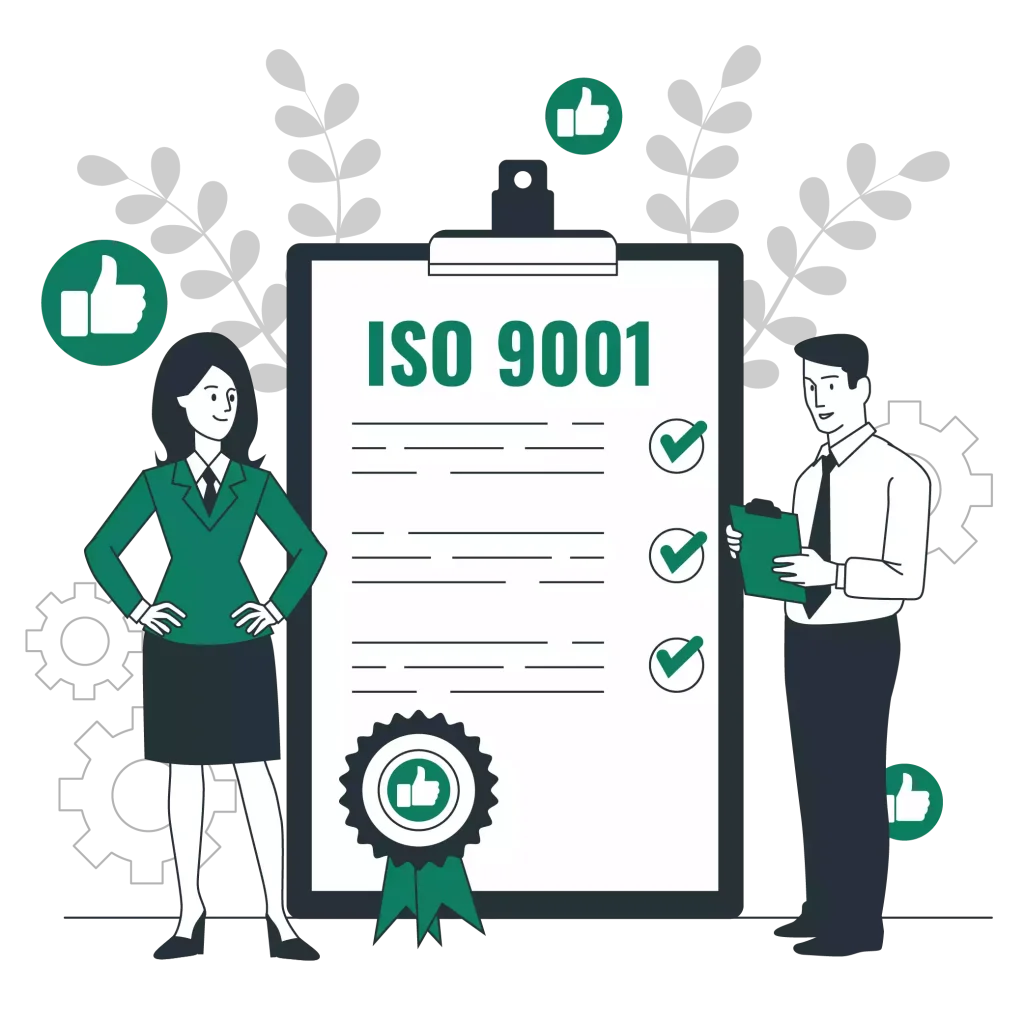
ISO 9001 compliance in Australia is the disciplined application of ISO 9001:2015 requirements across an organisation’s operations.

It differs from ISO 9001 certification because compliance focuses on maintaining processes that meet the standard, while certification is the formal recognition granted by an accredited body.

For Australian organisations, ISO 9001 compliance fosters credibility, enhances risk management, and strengthens operational efficiency. It also supports access to global trade and supply chains.

By engaging with the framework of ISO 9001 quality management, businesses can align their systems with international expectations while addressing local needs.

audit-img

Core Requirements of ISO 9001:2015

ISO 9001 compliance in Australia is built on structured requirements that guide leadership, planning, and continual improvement.

Key requirements include:

check
Defining the context and scope of the organisation.
check
Demonstrating leadership accountability and quality objectives.
check
Applying risk-based planning to processes and services.
check
Providing resources, competence, and awareness for staff.
check
Controlling operations with documented procedures.
check
Monitoring performance using data and audits.
check
Implementing corrective actions and continual improvement measures.

These requirements form the foundation of compliance and provide measurable results in Australian workplaces.

ISO 9001 Compliance in Local Context

ISO 9001 compliance in Australia is shaped by international standards and domestic obligations.

Key points include:

check

JAS-ANZ accredits certification bodies, ensuring the reliability of external audits.

check

Australian businesses expect quality systems to align with customer and regulatory requirements.

check

Compliance connects with Work Health and Safety obligations, the Privacy Act 1988 (Cth), and environmental regulations.

check

Sectors including construction, healthcare, education, manufacturing, and IT services rely on compliance for contracts and risk assurance.

check

Organisations developing audit capability can strengthen their knowledge through the ISO 9001:2015 Internal Auditor Training Course.

By linking global frameworks with Australian legislation and industry needs, ISO 9001 compliance delivers both regulatory assurance and competitive advantage.

ISO 9001 Compliance Checklist

An ISO 9001 compliance checklist in Australia helps organisations evaluate readiness and highlight gaps before external audits.

Essential checklist items include:

check
Conducting a gap analysis to identify nonconformities.
check
Confirming availability of key documents and records.
check
Ensuring leadership and staff understand roles in compliance.
check
Communicating requirements across the organisation.
check
Preparing for audits with objective evidence and clear reporting.

Using a checklist ensures teams remain accountable, while linking compliance activities to overall business goals. This structured approach supports systematic ISO 9001 compliance across industries.

ISO 9001 Compliance Tools and Software

ISO 9001 compliance software in Australia is an increasingly important tool for supporting governance and documentation.

Practical tools include:

Policies-Procedures

Digital QMS platforms for documentation and version control.

Security

Secure audit trails for accountability.

Cloud-based systems that meet Australian privacy regulations.

Processing-Integrity

Integrated platforms that connect ISO 9001 with ISO 14001 and ISO 45001 standards.

Adopting compliance software reduces manual effort, improves transparency, and helps organisations manage complex requirements more effectively.

Achieving and Maintaining ISO 9001 Compliance in Australia

Achieving ISO 9001 compliance in Australia requires structured planning, disciplined implementation, and regular monitoring.

Key steps include:

audit-control

Planning objectives and processes aligned to ISO 9001.

audit-outdated-document

Documenting procedures and keeping records current.

ongoing-monitoring

Implementing processes and controls consistently.

audit

Conducting internal audits to measure effectiveness.

meet-client

Undertaking a Management Review prior to your Certification Assessment

Policies-Procedures

Selecting accredited certification bodies in Australia for external audits.

streamlined-operations

Monitoring performance and embedding continual improvement.

This cycle ensures compliance becomes part of daily operations. For guidance on certification planning or partner selection, organisations can explore the certification partner program or request support through the certification quote process.

Common Challenges in ISO 9001 Compliance

ISO 9001 compliance in Australia presents recurring challenges that must be managed effectively.

Typical issues include:

collect-evidence

Confusing compliance with certification.

audit-outdated-document

Weak control of documentation and records.

ongoing-monitoring

Limited leadership commitment.

audit

Insufficient internal auditing capability.

Incident-Records

Over-reliance on checklists without linking to strategy.

By recognising these challenges early, organisations can strengthen compliance practices and maintain long-term success.

Future of ISO 9001 Compliance in Australia

The future of ISO 9001 compliance in Australia will be influenced by technology, sustainability, and regulatory trends.

Key developments include:

check

Greater integration of sustainability and ESG reporting.

check

AI-powered tools to manage compliance and risk.

check

Increased focus on digital supply chain assurance.

check

Stronger emphasis on proactive risk management.

To prepare for these developments, Australian organisations can seek guidance from industry experts with experience supporting compliance across diverse sectors.

Strengthening Systems with ISO 9001 Compliance

ISO 9001 compliance in Australia enables organisations to maintain robust systems, meet regulatory requirements, and demonstrate credibility in global markets.

By focusing on requirements, using digital tools, and embedding continual improvement, businesses can achieve resilience and long-term performance.

iso-audit-new

FAQ

ISO 9001 compliance means following ISO 9001:2015 requirements to run a quality management system. It shows a business meets global quality standards, but it does not always involve certification.

Align processes with ISO 9001:2015 requirements, complete a gap analysis, maintain documented information, train staff, and run internal audits. Many organisations then choose to gain certification from a JAS-ANZ accredited body.

A checklist is a structured tool that covers leadership, quality policy, risk management, documentation, operational control, performance monitoring, and improvement actions.

Software is not mandatory, but digital systems make it easier to manage documents, audits, and evidence. Australian organisations increasingly use cloud-based QMS tools to streamline compliance.

Manufacturing, construction, healthcare, education, IT, and government contracts often require it. Any business seeking customer trust, efficiency, or global market access benefits from compliance.

Compliance means an organisation meets the requirements. Certification is the formal recognition awarded by an accredited body after an external audit.